Publications

Articles and theses

Peer-reviewed articles

01 2026 Biomedical Signal Processing
and Control · 113(A), 108954

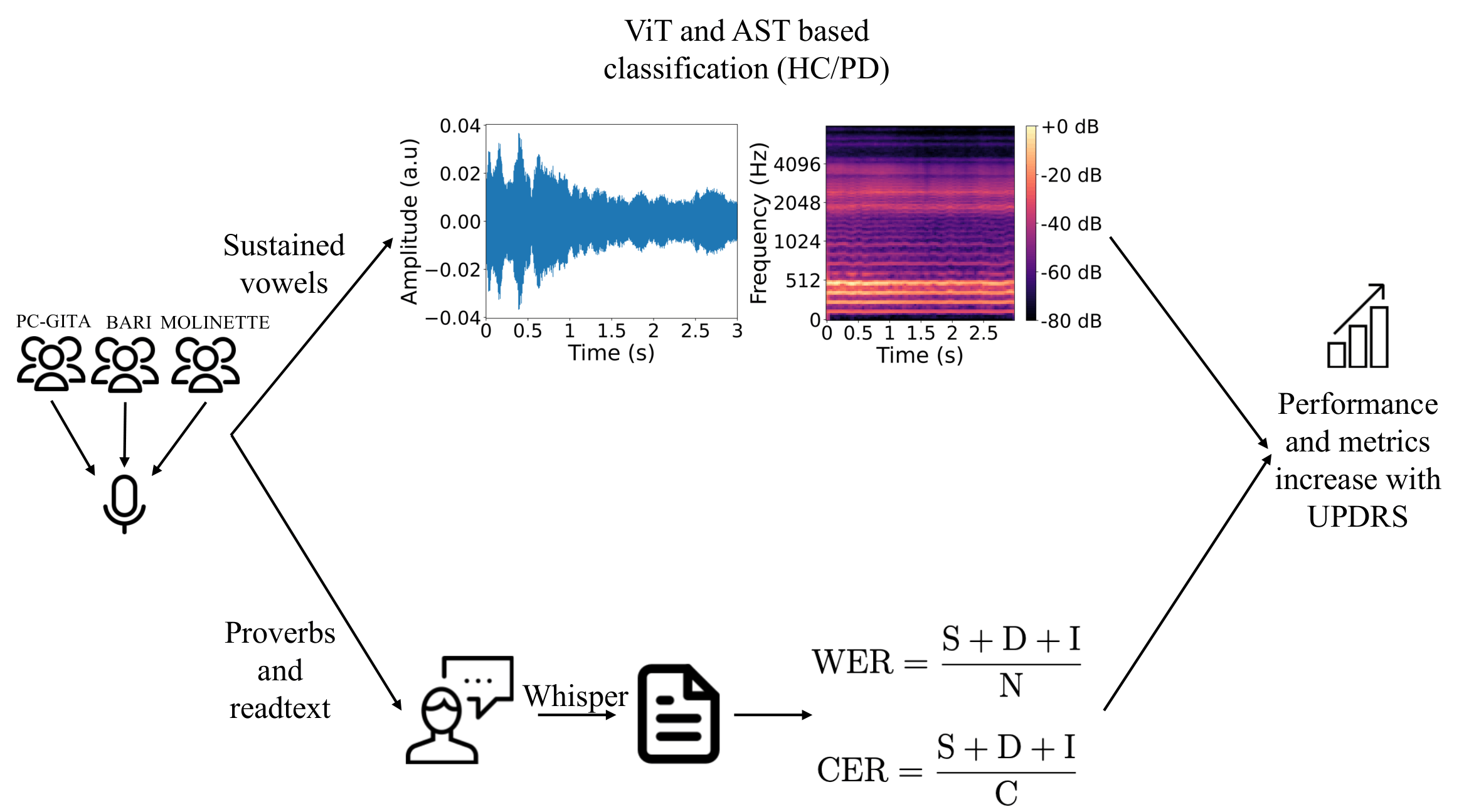
Voice classification in Parkinson's disease: a deep learning approach using transformers and error rate metrics

Perrone, B. · Amato, F. · Olmo, G. (First author)

Voice and speech changes affect up to 90% of people with Parkinson's disease. We trained Vision and Audio Spectrogram Transformers on vocal recordings to distinguish patients from healthy controls, reaching up to 73% accuracy. Word and character error rates from automatic transcription were significantly higher in patients and increased with symptom severity, supporting their use for non-invasive monitoring.
02 2026 Algorithms
19(7), 531

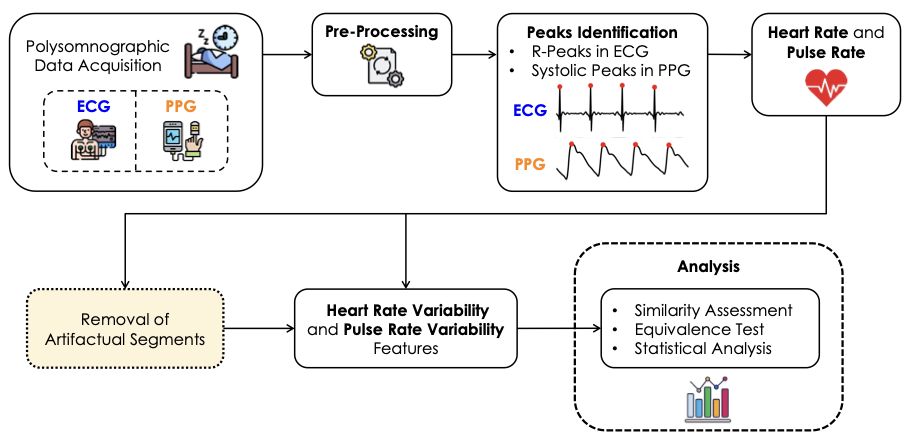
Full-night comparison of ECG- and PPG-derived measures of cardiac variability for sleep disorder screening

Perrone, B. · Ciampa, I. · et al. (First author)

Wearables measure the pulse (PPG) rather than the electrical activity of the heart (ECG). We compared the cardiac variability measures derived from the two signals over full-night recordings of 50 subjects, healthy and with different sleep disorders, and identified the features that agree well enough to support wearable-based screening.

Workshop papers

03 2022 DETERMINED 2022 · CEUR
Workshop Proceedings 3363, pp. 104-121

A review on computational tools for analytical visualisation and molecular interactions of sncRNAs: prospects in NDDs

Panagiotopoulos, K. · Ibanibo, L. · Perrone, B. · et al.

A review written during my bachelor's research internship at Politecnico di Torino. It presents the computational tools and databases available for predicting small non-coding RNA interactions and for network analysis and visualisation, in the context of neurodevelopmental disorders in preterm children.

Theses

04 2024 M.Sc. thesis
Politecnico di Torino

Voice classification in Parkinson's disease using transformer models and error rate metrics

Perrone, B. · supervisors: Olmo, G. · Amato, F.

The study behind the Biomedical Signal Processing and Control article. Vision and audio spectrogram transformers were trained on vocal recordings from three clinical datasets, and word and character error rates were used to relate what the models pick up to clinical severity scores.

Contact